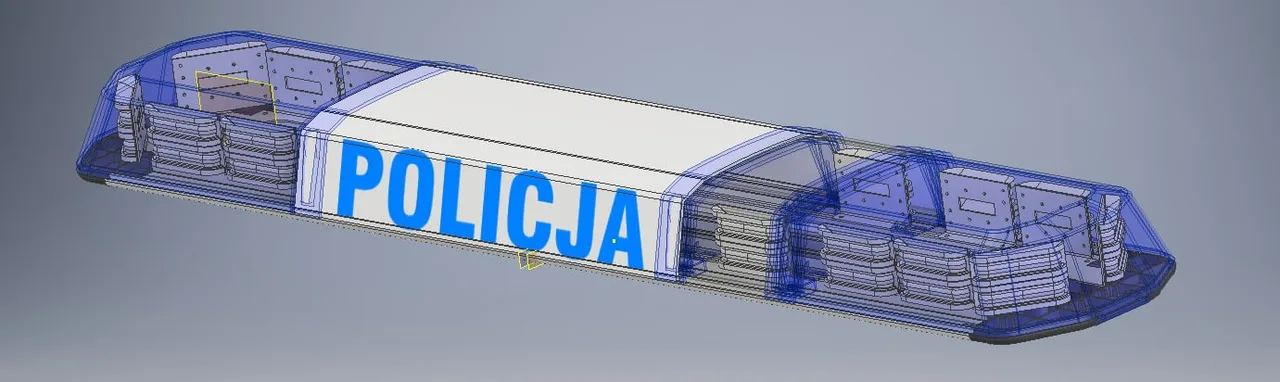
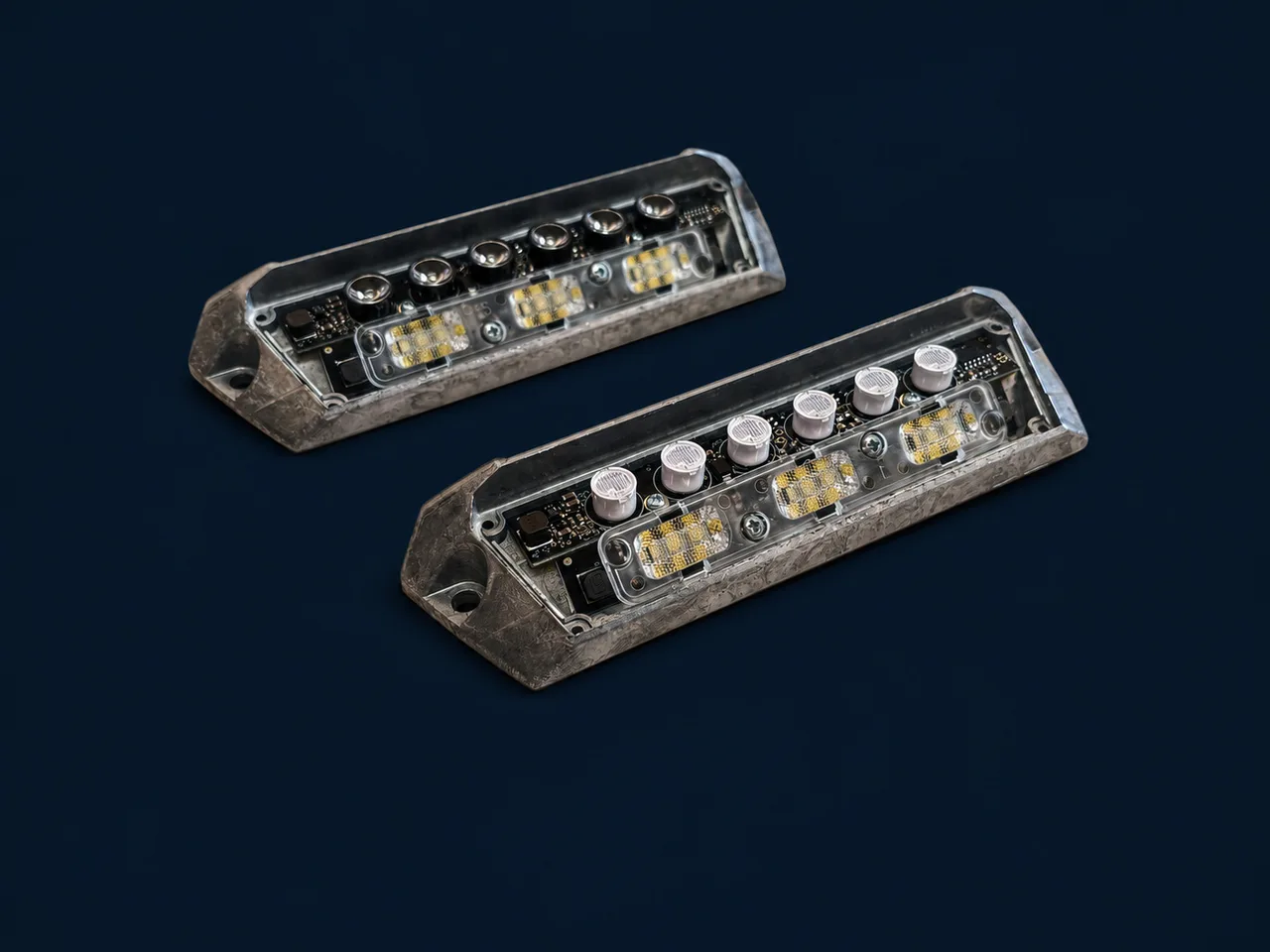
PROTOTYPEWork in progress
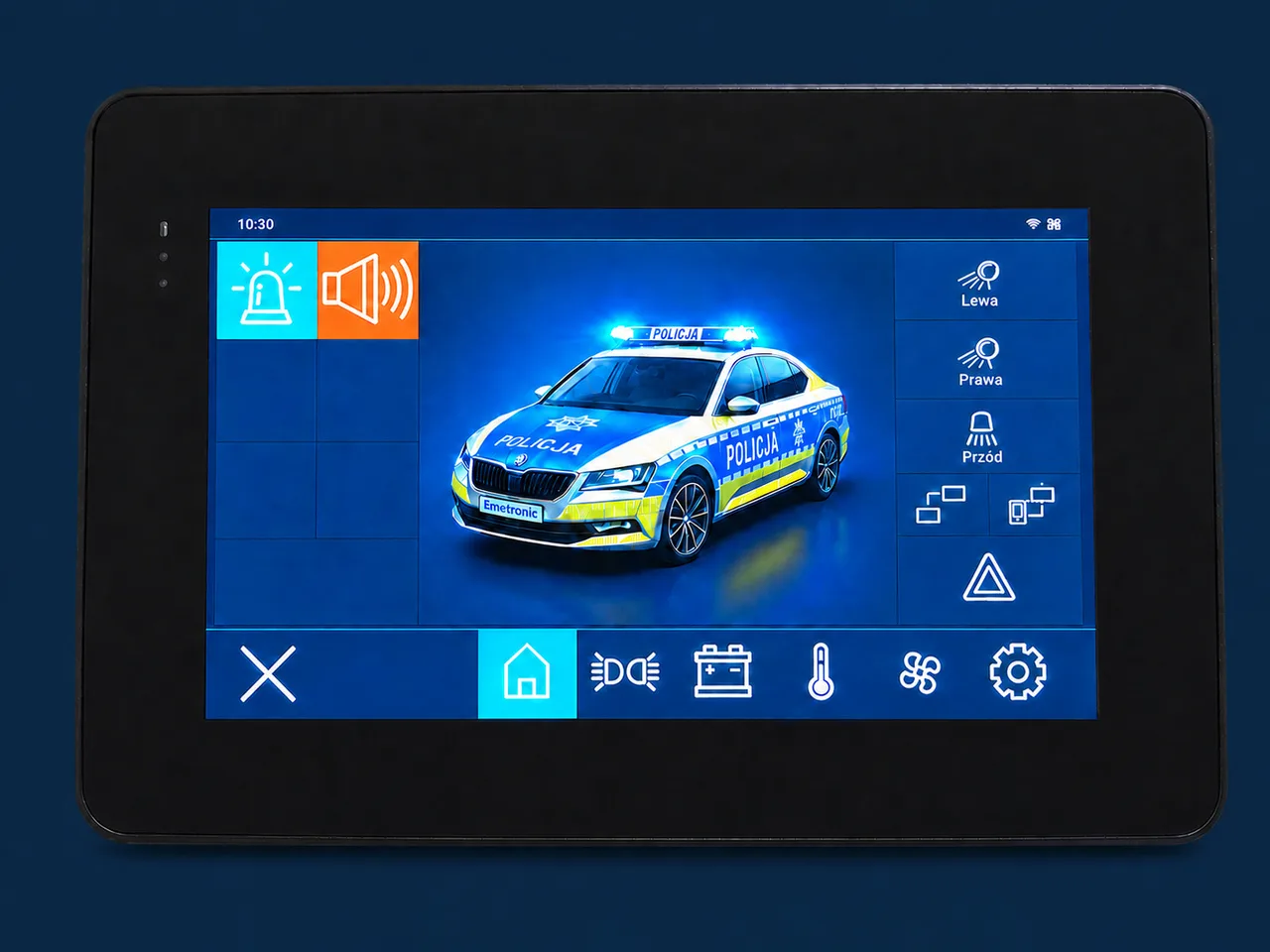
A touch panel controlling the whole vehicle
Signaling, lighting, power and temperature on one screen. Natively synchronised with EMCORE, not a universal off-the-shelf panel.
Read moreCertificates · Type approvals
A technical-commercial description of Emertronic's approach to certification. Not legal advice — confirm the requirements for a specific vehicle and service in the regulations and with your upfitter.
The E20 mark identifies the country granting the approval: Poland. Emertronic products are tested and certified domestically — close to production and the customer.
The UN regulation for special warning lamps: it defines categories (direction and angle of visibility), intensity classes and the photometric requirements of every flash pattern.
Class 1 permits night-time use only. Class 2 means legibility in daylight as well, with day/night switching. Every Emertronic lighting product carries class 2.
The UN regulation on electromagnetic interference: a device must not disturb radio communications, the CAN bus or other vehicle systems. We design for R10 from the first schematic and verify every product iteration with measurements in our own GTEM chamber — which is why our signaling runs reliably alongside two-way radios and on-board electronics.
What these regulations actually are, and how to read the marking on a housing, is explained in our knowledge base: ECE R65 — categories, classes and the approval mark and ECE R10 — electromagnetic compatibility.
R65 visibility categories
The category decides what role a lamp may play on the vehicle — and what it must never substitute for.
A full account of the categories and intensity classes — in the article on ECE R65.
Full geometric visibility around the vehicle.
PULSAR · REMEDY TRI-LITE
Approved in pairs — two lamps give the full 360°.
INFRAME
A supplementary layer. Note: X does not replace T/HT — it does not meet the 360° visibility requirement.
XPULSE · SPECTRON
We will check the configuration against the type-approval requirements and prepare the documentation.