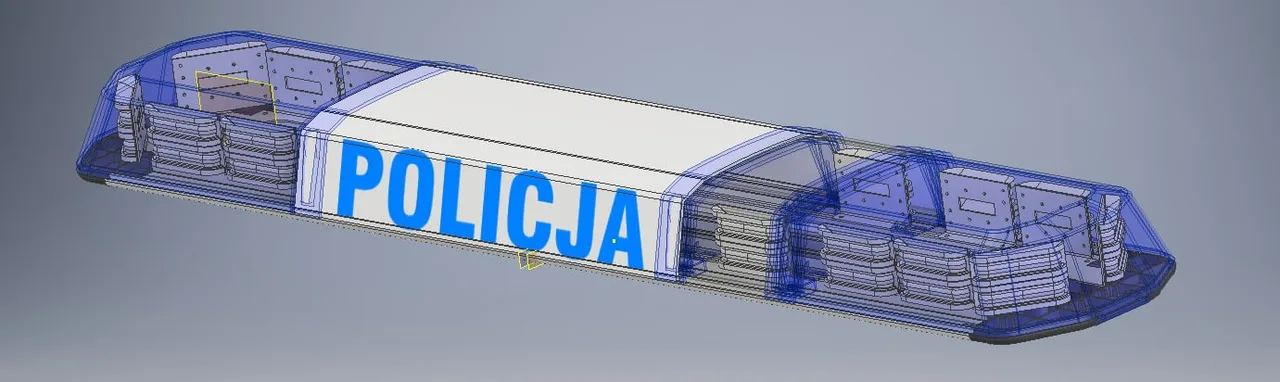
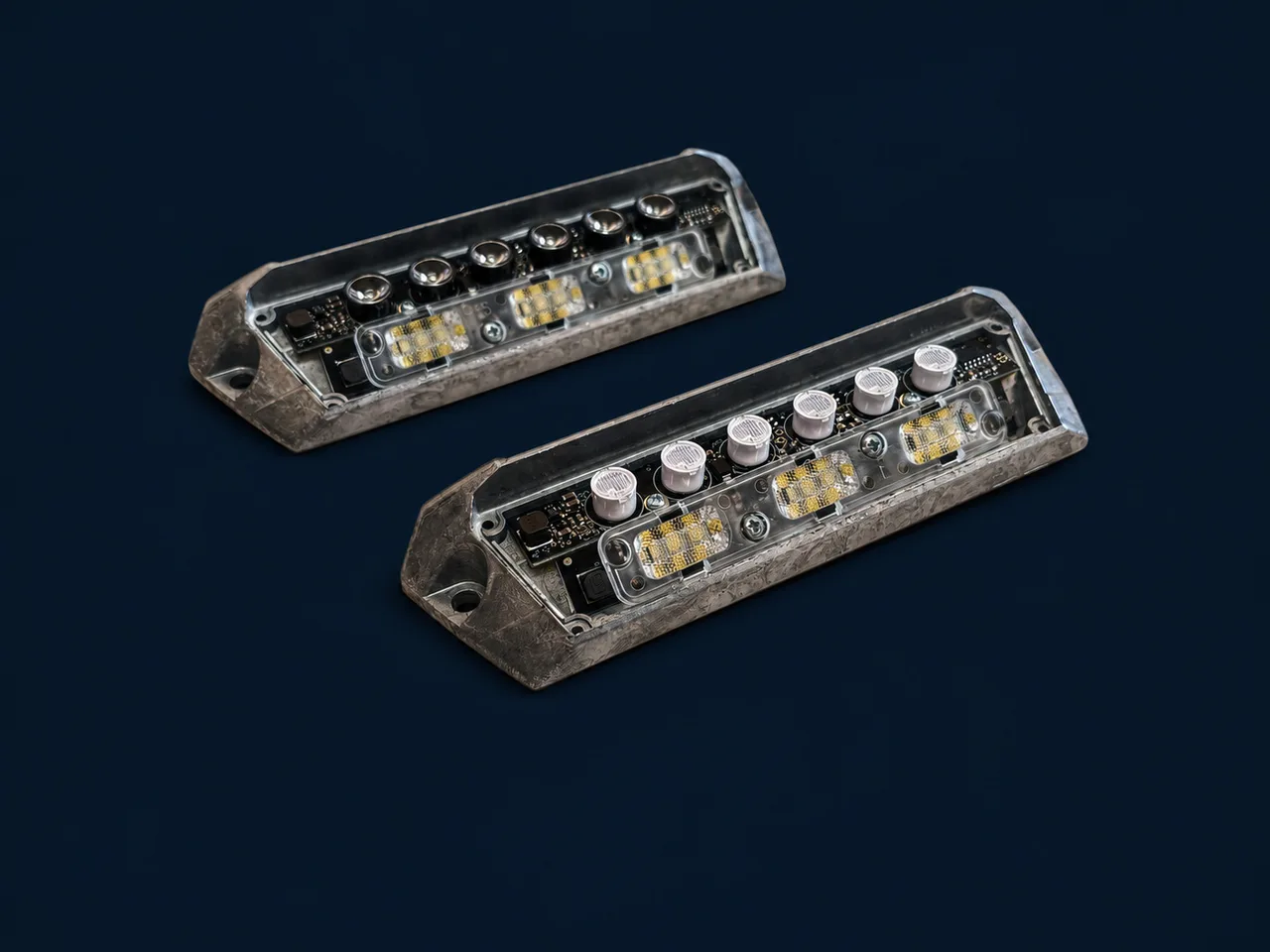
PROTOTYPEWork in progress
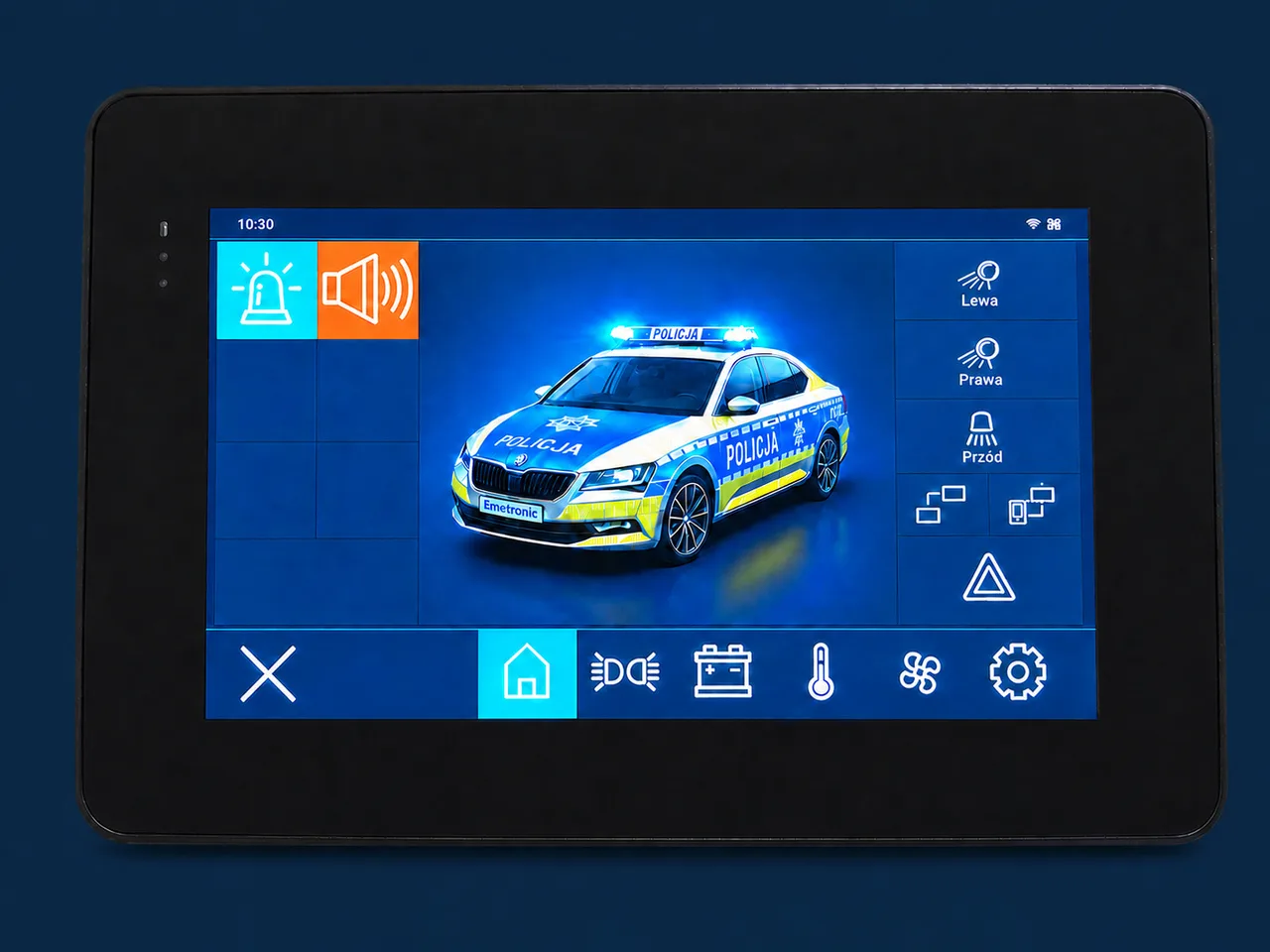
A touch panel controlling the whole vehicle
Signaling, lighting, power and temperature on one screen. Natively synchronised with EMCORE, not a universal off-the-shelf panel.
Read moreTechnology · Testing
Ten areas where we use no subcontractors — because we prefer to answer for the result.
In-house scope: design and prototyping, PCB production and SMD/THT assembly, our own EMC chamber and photometric laboratory, full supply-chain control — plus projects for the military and public services.
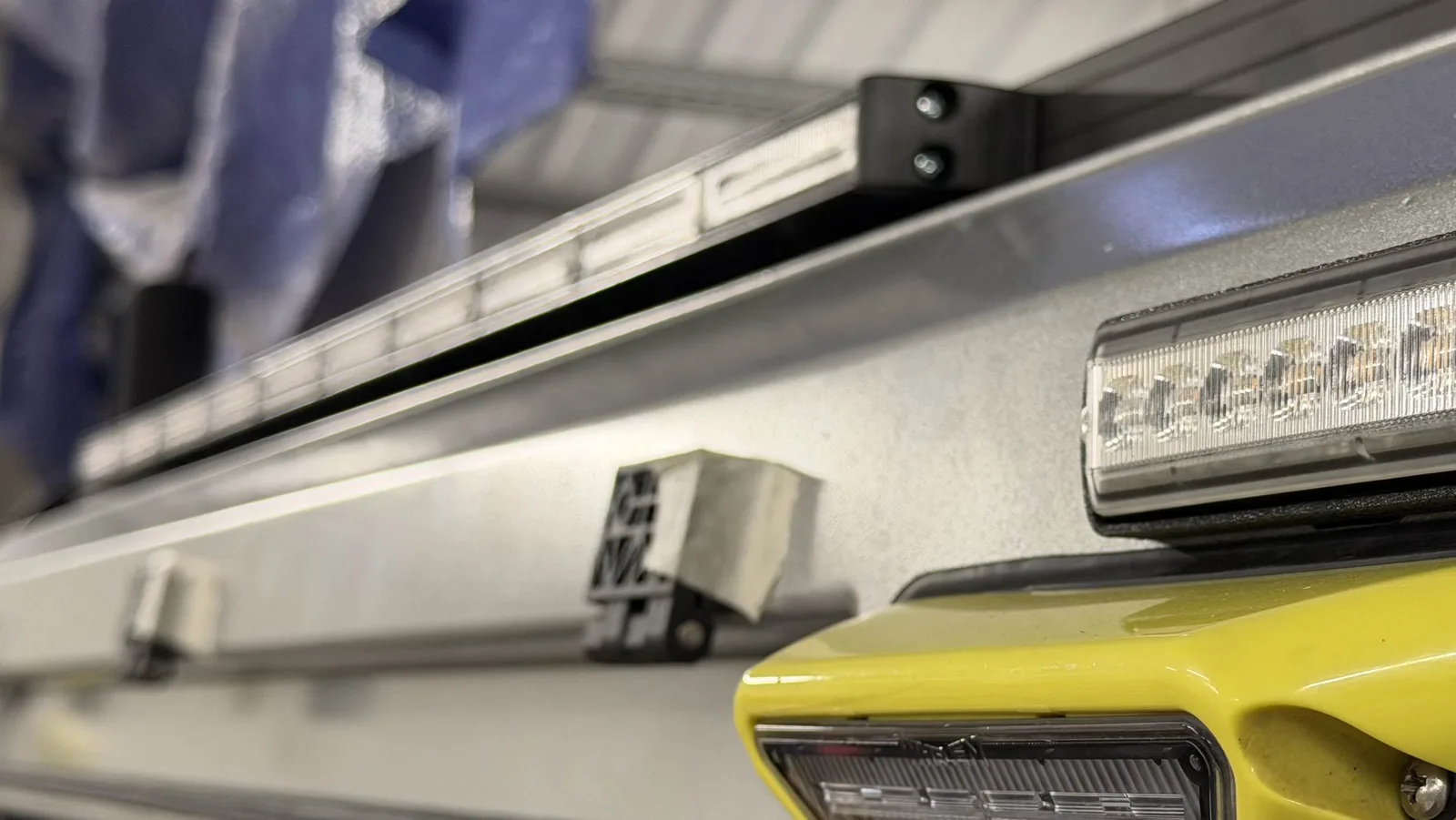
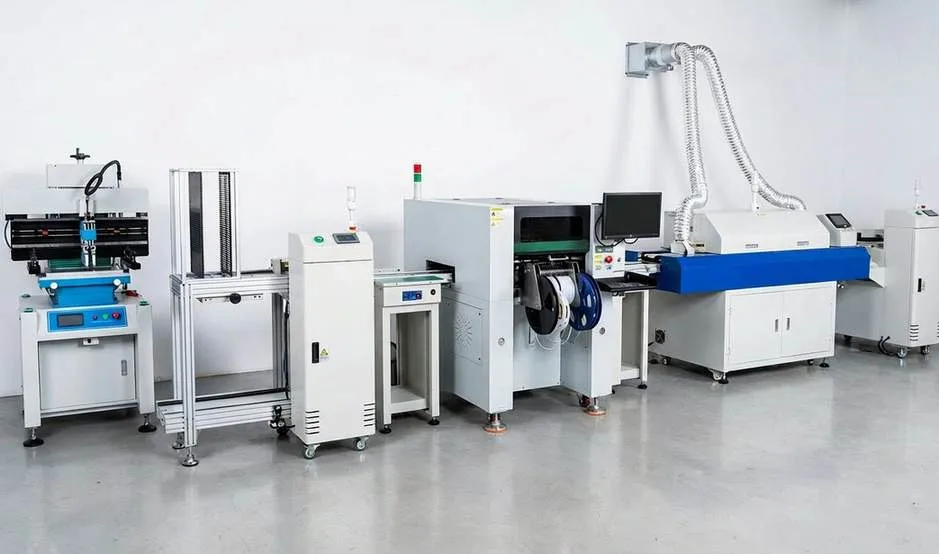
No middlemen: circuit design, board production, component placement, assembly, programming and the end-of-line test of every unit happen in one plant.
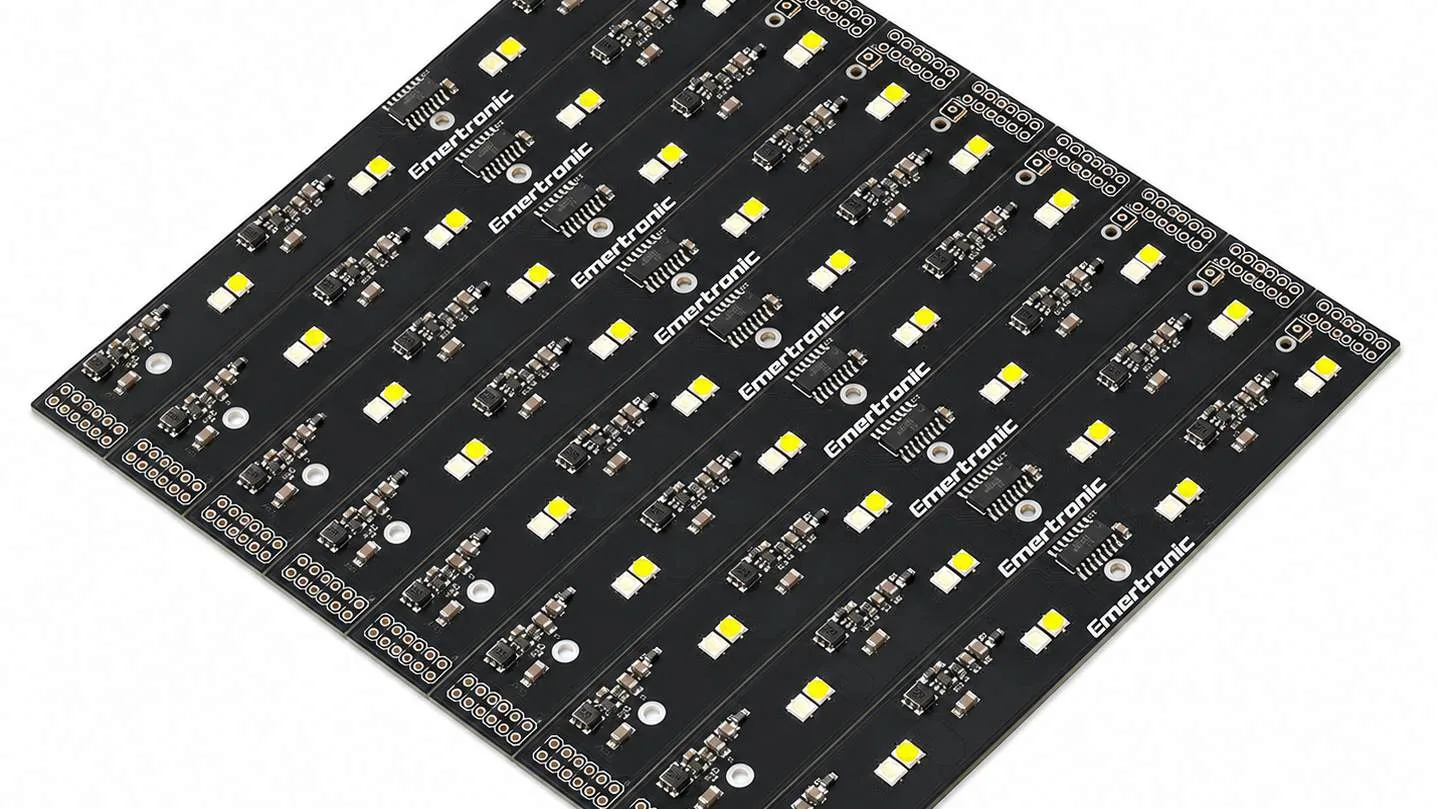
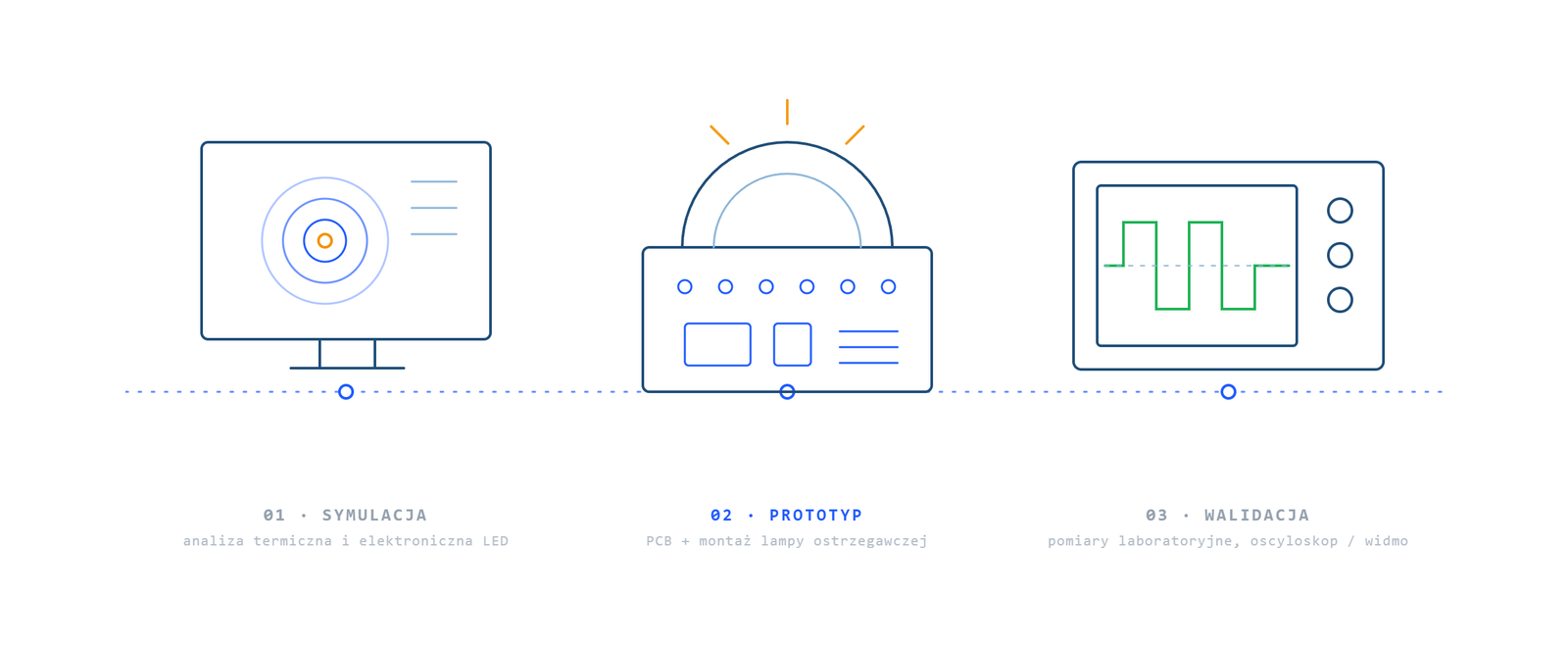
We iterate designs on site — from simulation through prototype to laboratory validation. Experience from defense projects flows into commercial products.
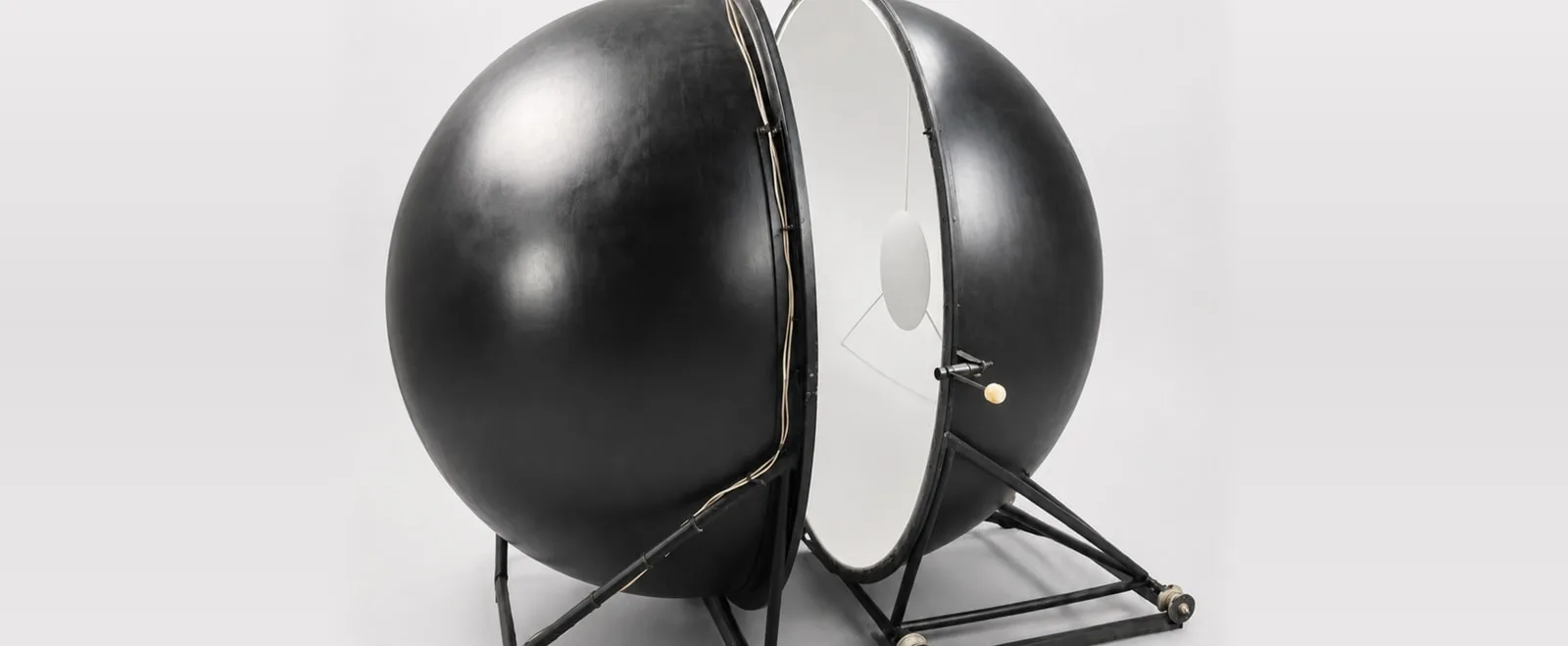
Every flash pattern of every configuration is measured photometrically against R65 class 2 — the highest intensity class, legible even in full sunlight. We aim at the upper end of what the regulation allows, not its minimum: as much light as the rules permit at all.
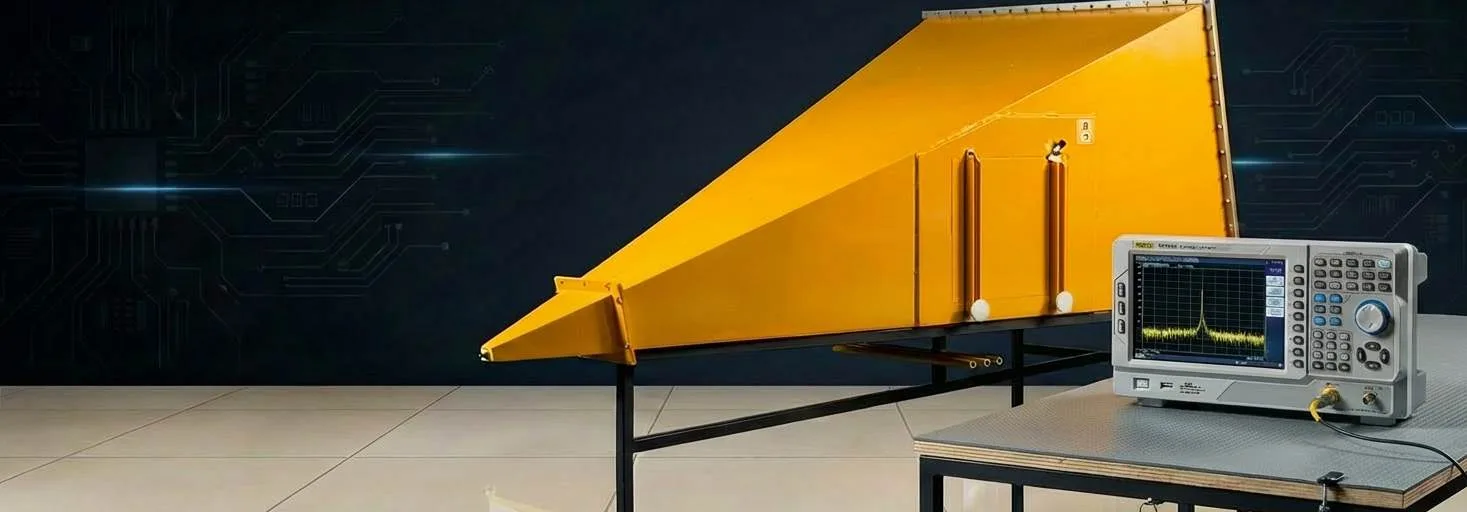
Regular conducted- and radiated-emission testing in our own GTEM chamber — with methods drawn from military standards, where immunity to interference decides the mission. Iteration in ≤5 days from prototype to report. We engineer for excellence — R10 is the starting line, not the finish.
“Less current. More light.”
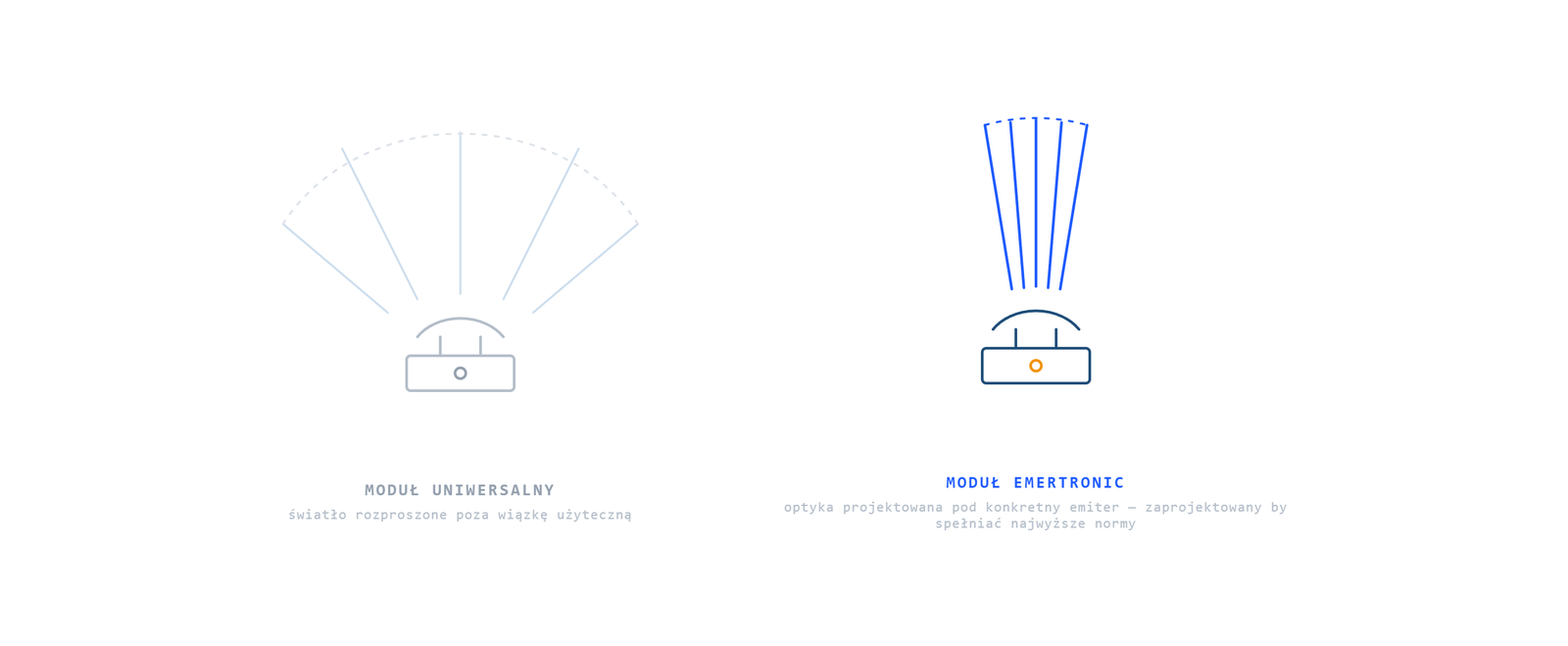
Optics designed for a specific emitter. An Emertronic module vs a universal one: lower current draw, higher luminance, longer LED life, better thermals.
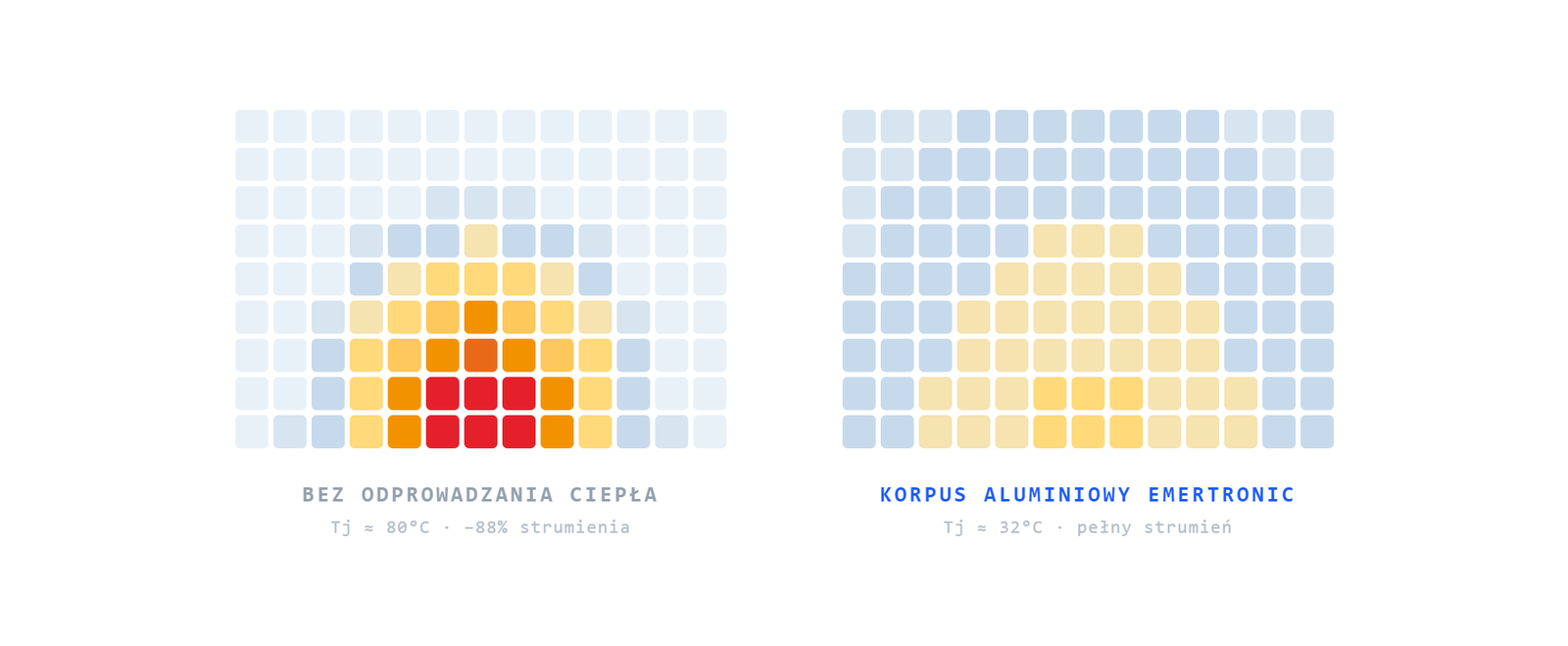
Heat is the enemy of LEDs: at an 80 °C junction, automotive amber loses ~88% of its flux and red ~75%. Aluminum as thermal mass, CFD simulation for every product, passive cooling — after an hour in the sun the lamp shines exactly as it did on the test bench.
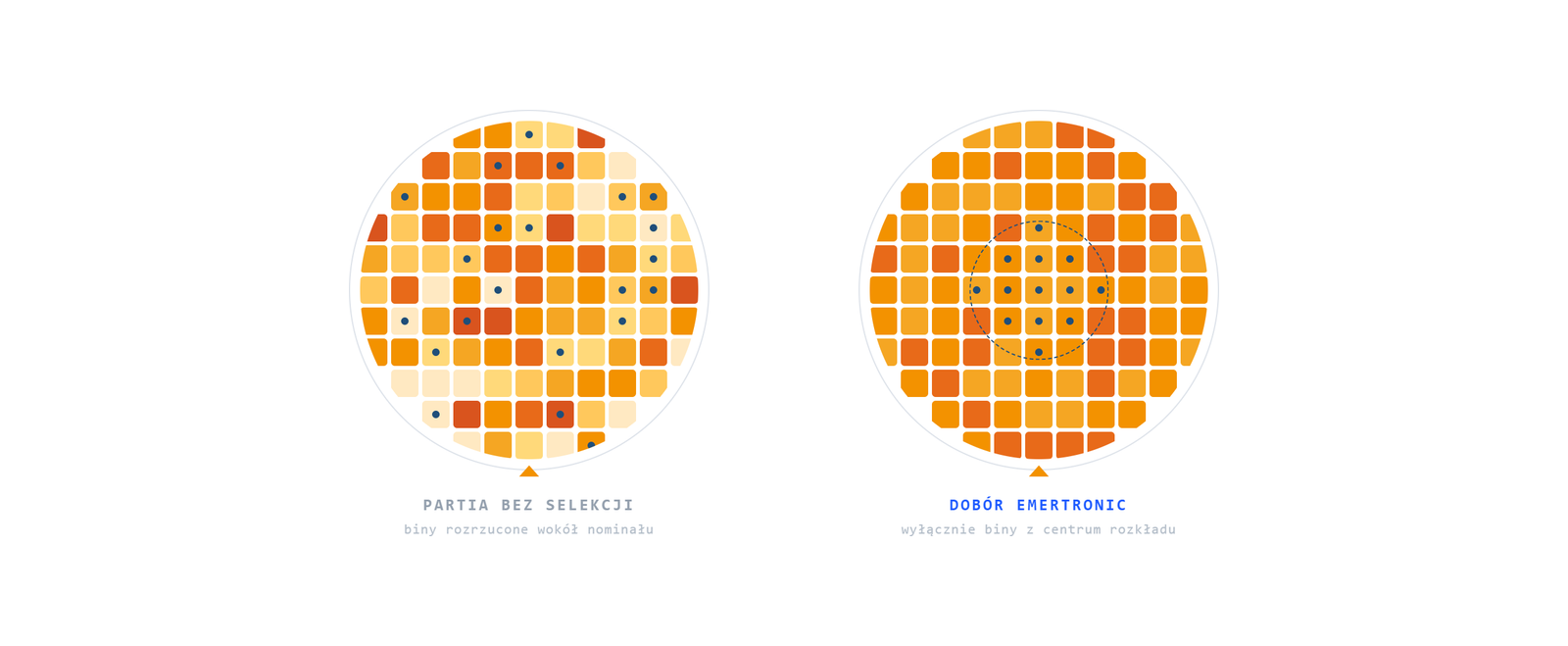
Manufacturers sort LEDs into bins — groups of similar flux, color temperature and forward voltage Vf. The bin is read from the LED code: in CREE XM-L2 U2, XM-L2 is the series and U2 is the brightness bin. In an unselected batch the bins scatter around the nominal, so brightness and tint differ from segment to segment — the lamp looks patchy. Emertronic uses only bins from the center of the distribution, closest to nominal: best flux and tint, a uniform lamp, repeatable between batches.
EU production and domestic partners: shorter lead times, full quality control, no dependence on a single supplier.
Light signaling, communications, LED and tactical warning systems for the defense sector. Details under NDA.
THUNDER series · Why louder
Four engineering decisions — not marketing:
Not OEM — full control of power handling and service life.
500–1800 Hz for the standard path, shifted down for REZON.
More flux in the gap = higher SPL at the same current draw.
Coil cooling — the sound stays clean even in long full-power duty.
The result: higher efficiency (dB/W) · better power handling · longer service life · greater real reach.
Upfitters and fleet customers are welcome at our plant in Czechowice-Dziedzice — see the process from PCB to final test.